Communication … LP consent

Discussed Scenario – Father refusing consent for Lumbar Puncture. 10 month old admitted with fever and convulsion, likely diagnosis of meningitis.Good candidate play and I did the role play of the father.A number of learning points.

  • You do NOT need a diagram to explain every situation.
  • Some things can be dealt with with a simple brief explaination – “CSF for test”.
  • Reduce pain by local anaesthetic, sucrose in neonates
  • You do NOT need a pain team to decide on pain relief.
  • Discuss treatment options and durations – may help decision making
  • When discussing a diagnosis: DONOT say ‘I think diagnosis is ..” – say “I suspect or highly likely to have”.
  • Is he going to die? – Be reassuring – “No or Unlikely with adequate treatment’. Do NOT skip.
  • “Do you know what is the matter with …”  – ‘What have you been told so far’?
  • Try to move from a specific test to the relevance in relation to treatment.
  • Meningitis need to be treated – hence LP is necessary to decide on correct treatment.
  • ‘Hot seat’ is important to learn.

I will add this to www.mrcpchonline.org visit to add more that I may have missed.
Anil Garg

Communication: Information sharing …

Information sharing regarding a genetic condition is a very standard scenario and you should all be well prepared for it.

Brush up basic genetics and common conditions, Trisomies, Cystic fibrosis, Neurofibromatosis, Haemophilia. You need not know great details as you can and should use the expertise of a Geneticist colleague for guidance.

BUT DO NOT give wrong information and try not to be too technical.


Communication station – more than any other is a ‘show’ and you have to act your part.


I gave a plan of how you should set your ‘stall / scene’. Follow the guidance and you should have safe passage at the stations.


Learning points today are:

  • Participate in the sessions and come out of your comfort zone.
  • You will HAVE to do it in the exam – so practice NOW.
  • Do NOT be too technical.
  • When explaining any abnormality – start with a brief description of NORMAL.
  • You can then put the variance in perspective.
  • Keep it SIMPLE – what a 10 year old can understand.
  • Do NOT over complicate.
  • Do NOT give information NOT asked for – danger of ‘Irrelevant comment’.
  • Do check understanding frequently
  • Summarise YOURSELF – this is more time efficient.
  • While waiting outside with scenario:
  • Think of WHAT YOU DO KNOW
  • Break it down to small chunks to explain.

Today’s session is uploaded for view.

Do leave a comment.

Communication Scenario … Drug Error

We had a useful session role playing a common scenario.


A child is given a wrong medication accidentally. Task is to inform parents.There are number of subtle variations but the approach is essentially the same on tackling the scenario. There was reluctance by candidates to ‘bite the bullet’ and a fair degree of ‘beating around the bush’.
I role played a candidate as How I would tackle the scenario.

The learning points are:

  • Build rapport but need not beat around the bush
  • If you ask for parents concerns – respond to them – Do Not ignore them.
  • Mention the task as early as possible.
  • Have a plan of how you will be attempting the scenario.
  • Do offer a sincere apology BUT do not be too appologetic and stray off course.
  • You should seem confident.
  • Describe the incident clearly in about 1 minute and keep quiet for role player to respond
  • Learn important phrases and practice so you sound natural.
  • Do NOT say mistakes will NEVER happen.
  • Process to discuss in detail and have learning outcomes to reduce error.

Video Scenario …..

The information given was of a 6 month infant gaining excessive weight crossing from 50th to 91st centile. Presentation was of distress, throwing out / extending of arms and legs.
First impression could have been of Infantile spasms / Salaam attacks but the differentiating point was the history of weight gain. Most struggled.

Learning points were:

  • ALL given information is relevant and MUST be considered
  • Work on a differential diagnosis
  • Watch the video till the end
  • Ask relevant questions in history to help you differentiate your DD
  • Specific targeted examination
  • Keep management simple and first things first
  • Always mention will discuss with your consultant
  • The session was to highlight importance of using all information provided.

Check out if I have missed any other learning points.

Video Scenario …..

A 14 year old with 2 week history of being unwell and weight loss. Clinical signs were suggestive of DKA. The clinical signs were identified and discussion on differential diagnosis with appropriate clinical justification was good. Management was discussed briefly.


Learning points:

  • Read up current management guidelines for DKA management
  • Consider basic things first.
  • Differential diagnosis – ensure our fundamentals are correct
  • History and examination question – be specific and sleek
  • Think what will help you narrow DD and reach your diagnosis
  • DO NOT suggest full system examination
  • Investigations – think AS IF you are managing in the WARD
  • Do NOT forget basic investigations – FBC, U&Es, Bl Gases.
  • DO NOT mention an investigations if you cannot discuss it i.e. Anion gap.
  • SUGGEST read Management of all ACUTE presentations

Clinical – Growth & charts …

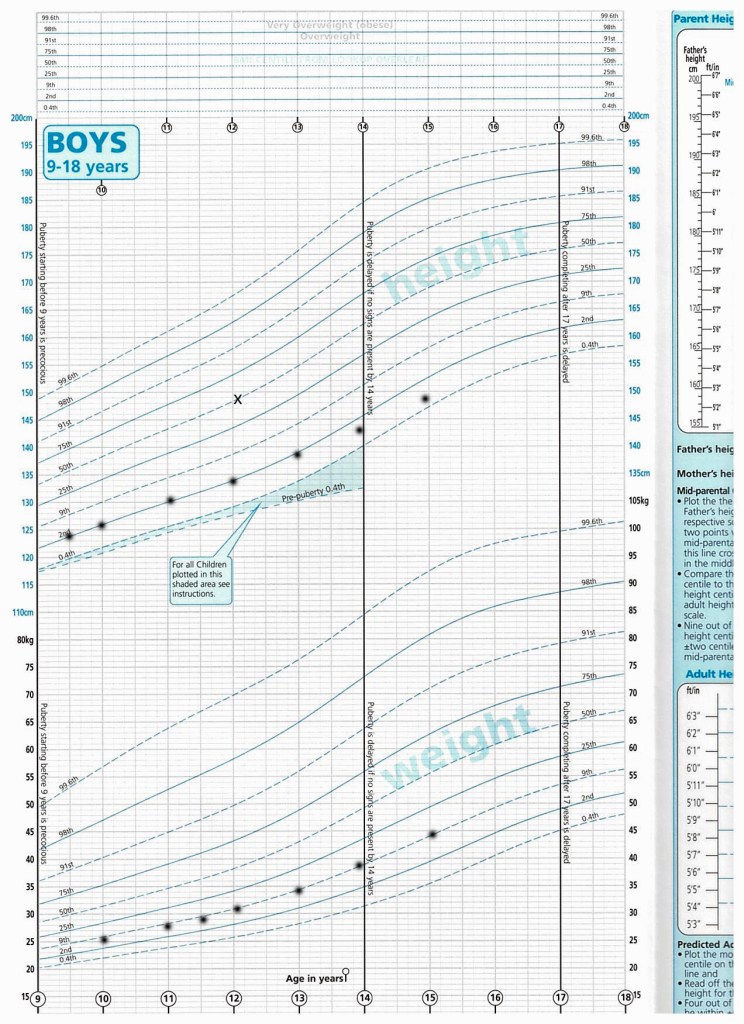
Growth charts are bread and butter practice for paediatricians. Every child we see, subconsciously we, compare against a ‘normal’ range for the community.
We discussed two scenarios of a young person who was bullied at school and was smallest in his friends group and a child who started losing weight at 7 months.
Learning points were:

  • Know growth charts well. You can run into them in the exam.
  • ALL ‘marks’ on the chart are for a reason – NOT an error
  • If NOT sure of a mark – ASK? Confirm.
  • Difference in Bone age to chronological age is important to know.
  • Learn how to communicate with parents in a simple easy to understand language.
  • Do not complicate matters by suggesting very rare diagnosis
  • 7 month failure to thrive is likely to be weaning related – coeliac – NOT IBD
  • Suggest relevant investigations with results you will be expecting.
Leave your comments

Clinical – Eye examination ..

Dear Sir,

Summary of today’s class Structured approach-Eye examination Visual acuity. 

Check each eye individually Field of vision Colour vision.

Eye movements-fix the head, can use a torch.

Cover/uncover test  Pupillary  Accomodation reflex 

Finish with mentioning fundoscopy

Comment on glasses

Go through all steps in clinical exam- negative findings can be used to reinforce diagnosis.

Always complete the examination or video fully before commenting on findings.

If asked by examiner what questions to ask parents – CLOSED QUESTIONS eg -h/o trauma – yes/ No.

Today’s case prosthetic eye- Non functioning right eye Thank you once again for today’s class.

Regards Dr FF

Clinical – Another – Eyes …….

Eye examination is something we do routinely but not in full details and it is a fairly common scenario to come across in an exam.


Non-functioning eye with prosthetic cover is quite common. I had a child in my care in UK and also we saw one child in Kolkata. Children with this difficulty are generally otherwise very well ands are good candidates for the exam.

The learning points from today are:

  • Start with basic vision test and complete all the modalities advised
  • Steady the head when testing for eye-movement
  • Even if you are fairly confident of the diagnosis halfway through your examination cycle I recommend you go through the rest of the function check also.
  • Practice the cover test on normal children – to get smoothness in your technique
  • Check vision in EACH eye.
  • Eye prosthesis norma are REMARKABLY NORMAL looking and can confuse any one at a cursory look.
  • You CANNOT afford to miss a NON FUNCTIONING eye.

Clinical Neuro scenario

Dear Sir,

Thorough discussion.Class was about fine tuning ourselves to the subtle signs which will make/miss our diagnosis.

1. First 30 sec of observation- spent that time.

2.Power of observation-during gait LOOK at the upper limb as much as the gait and lower limb.

3.Different Size shoes.

4.Head,Shunt,spine,shoes.

5.standing on one feet , squating can add on to finding the weak limb.

6.CHEST for etiology , median sternotomy scar – eyes does not know mind does not see (new information)

7.scar in spine – Trauma can be an etiology8.Hemihypertrophy -tone, power,reflexes will be normal.

This is all that I can remember.Thank you very much.

Dr FF – UAE

Clinical Station – Neurology ..

WHAT OUR MIND DOES NOT KNOW – OUR EYES DON’T SEE.
There were a lot of subtle signs which are not obvious on the video but discussion and highlighting them will ensure you will NOT forget them in the exam.


First 30 seconds are VITAL – General observation – from a distance will give you 60-80% of the information on the diagnosis.

Work out a differential in your mind.

Following that you will need to proceed systematically to elicit the signs that are present. DO NOT make them up.

  1. Gait – decide as discussed last time.
  2. Look at the ARMS also and NOT only the legs.
  3. 4 Ss.
  4. Shoes / Spine / Shunt / Squint
  5. Kneel down / squat to look at feet and legs for scars and bulk.

Put the signs elecited together and go through your differential diagnosis.


Rest will follow.

Check out the support available to children – it is on the website. Leave your comments – Dr FF is the most diligent in writing to me about the sessions. thank you FF.